Empowered Jurors are Guardians of Liberty Against Unjust Laws

Brady List
Potential Impeachment Disclosure [PID] Database
Transparency. Accountability. Due Process.
Explore public-facing accountability records and potential impeachment disclosures involving law enforcement officers, prosecutors, judges, and government agents.
Articles
Breaking the Chains of Injustice
Jury Nullification and the Fugitive Slave Act
In the mid-19th century, the Fugitive Slave Act of 1850 became one of the most contentious laws in American history, pitting federal authority against the conscience of free-state communities. As part of the Compromise of 1850, the Act required citizens and officials in free states to assist in the capture and return of escaped enslaved individuals. It imposed harsh penalties on anyone aiding fugitives or obstructing their capture, further entrenching the institution of slavery in American law.
The Verdict Heard ‘Round the World
Jury Nullification in the O.J. Simpson Trial
Few trials in American history have captured public attention like the 1995 trial of Orenthal James (O.J.) Simpson. A former NFL superstar and beloved public figure, Simpson faced charges for the brutal murders of his ex-wife, Nicole Brown Simpson, and her friend, Ron Goldman. The trial was not just a legal proceeding; it became a cultural phenomenon, exposing racial and social divisions in the United States.
Law Enforcement
the Suppression of Jury Discretion
The jury system is often hailed as a cornerstone of democracy, empowering ordinary citizens to serve as a check on governmental power and ensure fairness in the administration of justice. Yet, in practice, law enforcement and prosecutors exert significant influence to suppress jury discretion, particularly the right to nullify unjust laws. This suppression undermines the jury’s independence, tipping the scales in favor of the state and perpetuating systemic injustices.
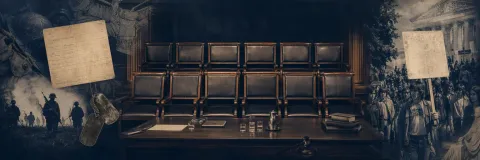
Drafting Justice
Jury Nullification in the Vietnam War Era
The Vietnam War was one of the most polarizing conflicts in American history, sparking widespread protest and resistance across the nation. From the mid-1960s through the war’s conclusion in 1975, the military draft became a flashpoint for dissent. Many Americans viewed the draft as an unfair and immoral mechanism that disproportionately targeted the poor and minorities to fight in a war they increasingly opposed.
The Chilling Effect
Gag Orders and Judicial Contempt
The American jury system is a cornerstone of democracy, designed to empower citizens to safeguard justice by independently evaluating evidence, law, and fairness. Yet, this role is increasingly undermined by judicial tools like gag orders and contempt charges, which suppress discussion of jury nullification. These measures create a chilling effect that stifles transparency, silences dissent, and limits the jury’s ability to act as a check on unjust laws.
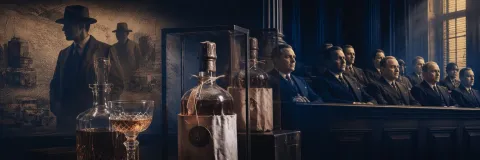
Cheers to Defiance
Jury Nullification and Prohibition’s Legal Rebellion
The Prohibition era, spanning from 1920 to 1933, marked one of the most controversial periods in American legal history. Championed by temperance advocates, Prohibition sought to eliminate alcohol consumption to curb crime, domestic abuse, and other social issues. The result was the 18th Amendment, enforced through the Volstead Act, which banned the manufacture, sale, and distribution of alcohol nationwide.
Media Image